
“Between what was built and what remains, the ground holds its own testimony.”
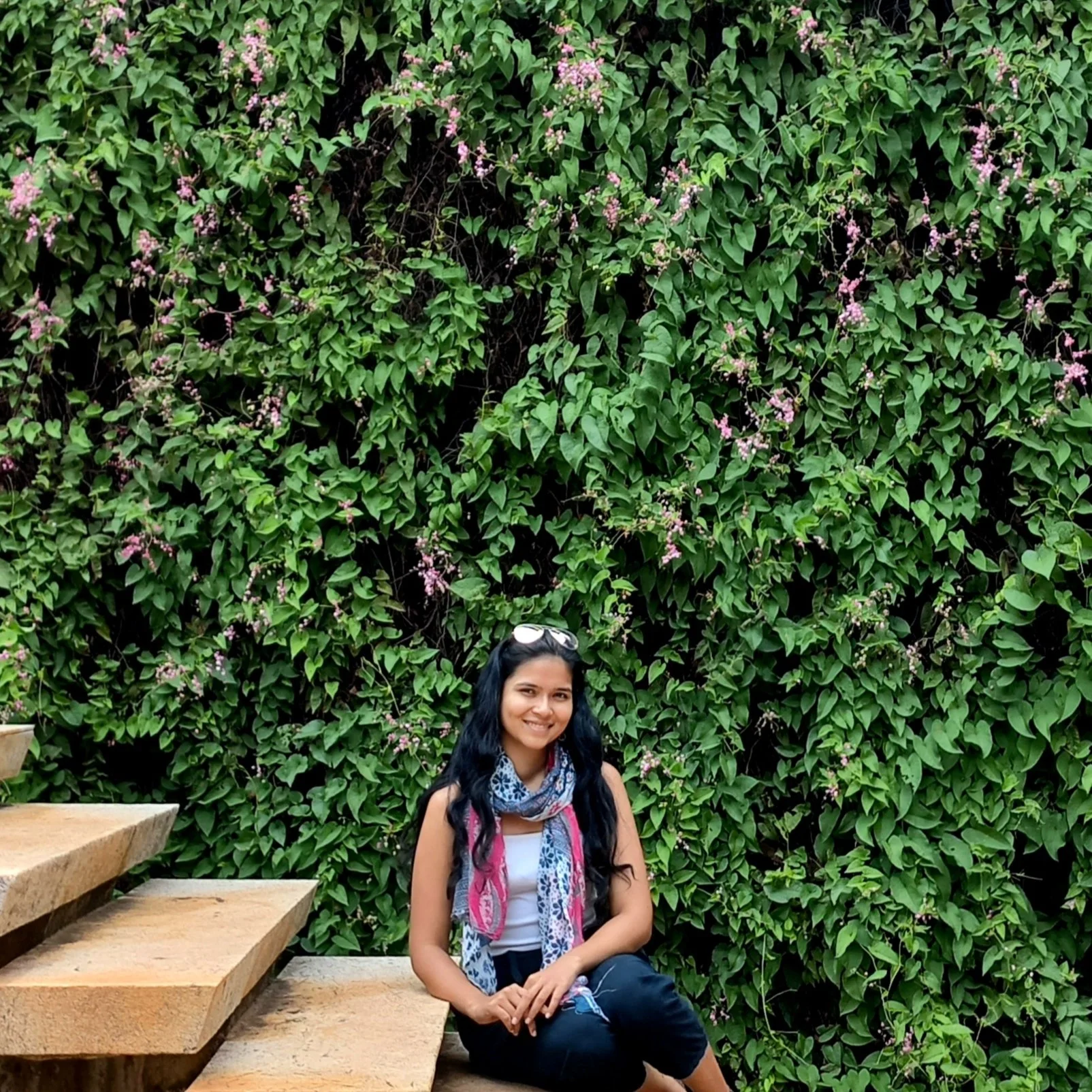
Spurty Kamath's work investigates the temporal dimensions of built and natural environments—tracing how landscapes function as repositories of ecological memory, how infrastructural systems embed relations of power, and how present vulnerabilities emerge from accumulated spatial decisions.
An architect and ecological designer pursuing a Master in Design Studies (Ecologies) at the Harvard Graduate School of Design, her work operates at the convergence of spatial justice, climate policy, and regenerative design—not as discrete fields, but as interconnected forms of ethical practice. Her approach is founded on the understanding that design decisions are inherently political: every spatial intervention, material specification, and policy framework determines distributions of benefit and burden. She addresses this through evidence-based research, participatory methodologies, and analytical frameworks that render relations of power legible.
Spurty's practice has been shaped by engagements across diverse institutional and geographic contexts. In Auroville, she gained proficiency in vernacular earth construction and ecological restoration while serving as liaison during contested infrastructure negotiations—experiences that revealed diplomacy as fundamental to ecological planning practice. At Harvard Forest, she developed geospatial mapping resources for the Nipmuc community and trained community leadership in their maintenance—a model of capacity transfer rather than extractive consultation. In Patagonia, supported by the Salata Institute, she is conducting energy audits in informal settlements and co-developing retrofit interventions that prioritize affordability and replicability.
Through advanced geospatial analysis, embodied carbon assessment, climate vulnerability modeling, and collaborative workshop facilitation, she develops technical methodologies that interrogate the relationship between historical land use and contemporary environmental consequence. This approach shapes both her exhibition "Gumm"—an exploration of migration's spatial geographies in India—and her current research with Prof. Alexander Wall on how urbanization patterns destabilize rural ecological systems.
A KC Mahindra Scholar and Teaching Fellow for renewable energy policy, Spurty's work positions landscapes not as extractable resources, but as repositories of knowledge requiring sustained attention. She pursues design practices where architecture, planning, and ecology integrate—not to impose predetermined solutions, but to facilitate repair and expand the scope of collective possibility.