Aaram
From drive-by to dwell-time
Team - Sanika Pai, Spurty Kamath
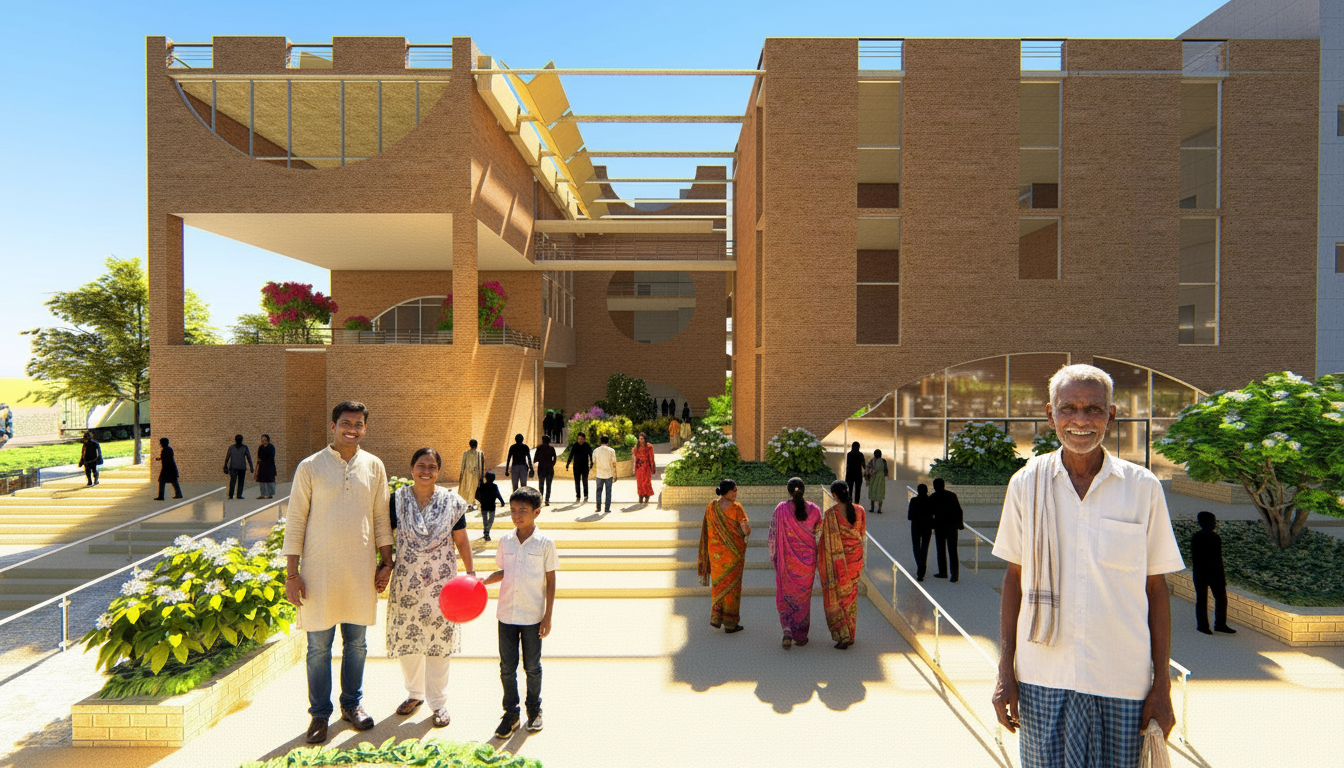
This project reimagines a wayside amenity on the Mumbai–Nagpur Expressway as a walkable landscape that slows travelers down and prioritizes human experience over vehicular flow. Through a series of shaded courts, terraces, and landscape rooms, the complex consolidates dhaba, dormitory, healthcare center, village haat, fuel and service areas, creating a continuous pedestrian promenade between built and unbuilt spaces. Bioclimatic strategies, such as stack effect, wind tunnels, water bodies, and rooftop gardens, shape the massing and microclimate, turning a typically transient highway pause into a place of rest, care, and everyday social life.
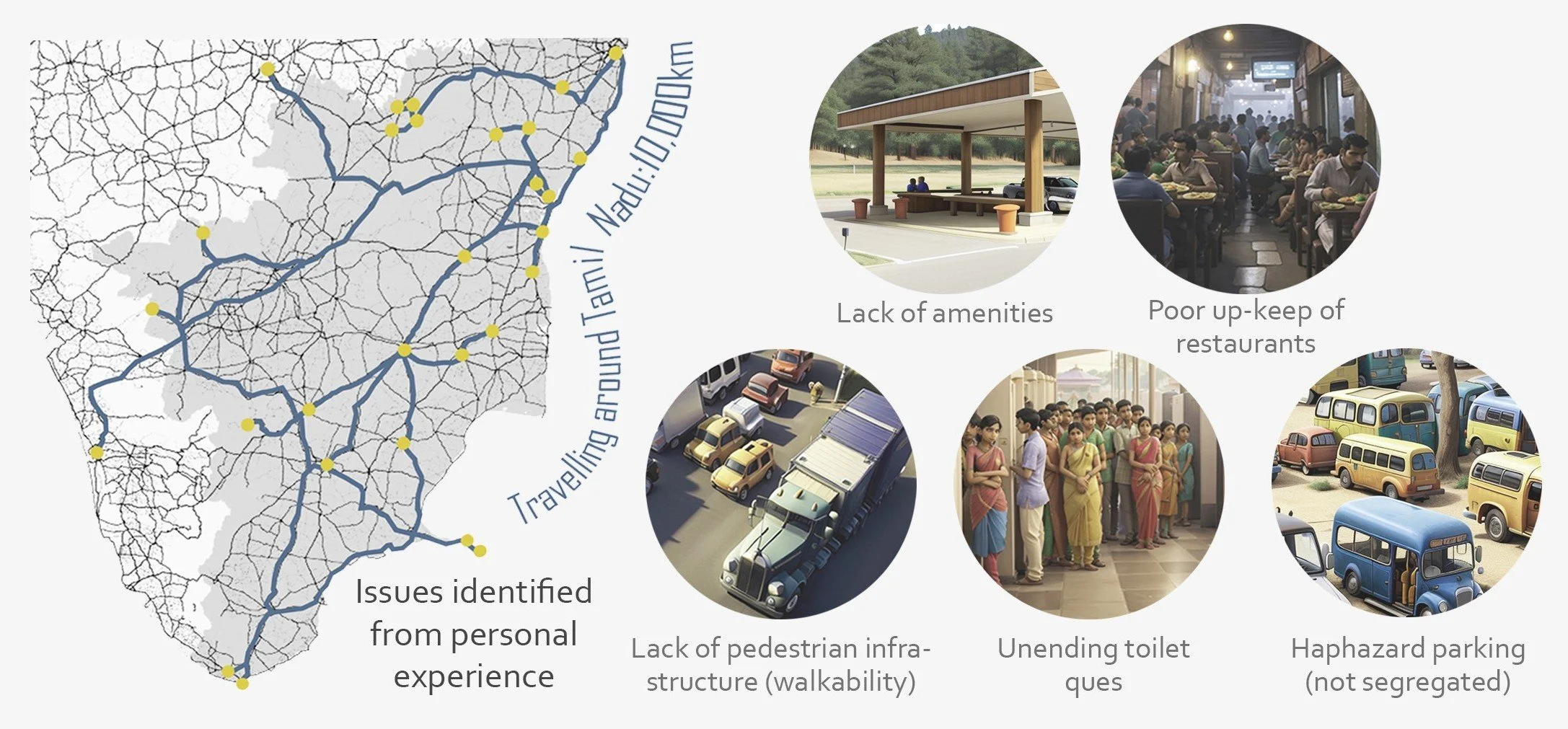
Drawing from my extensive experience of long-distance bus travel, my teammate and I began the project with a reflective dialogue on these journeys. We analyzed my personal observations to identify spatial and infrastructural shortcomings that could be addressed through design. Our conceptual framework emerged from the compressed, thirty‑minute window between disembarking from the parked bus and reboarding it: navigating chaotic traffic and crowds, queuing for inadequate and overcrowded sanitation facilities, and hastily consuming a meal in congested, poorly organized dining areas. This narrative sequence became the basis for rethinking movement, comfort, and dignity within the wayside amenity.
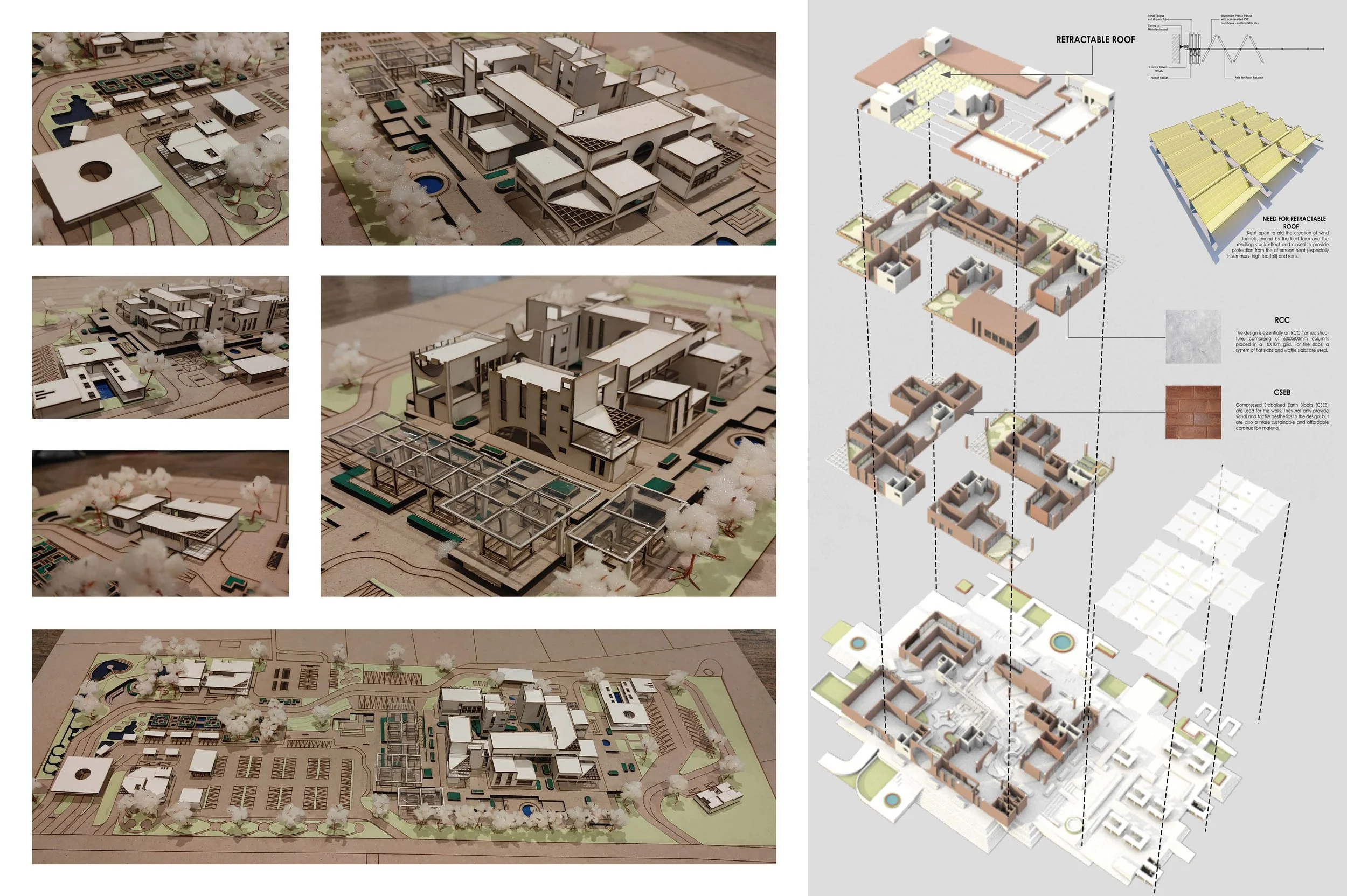
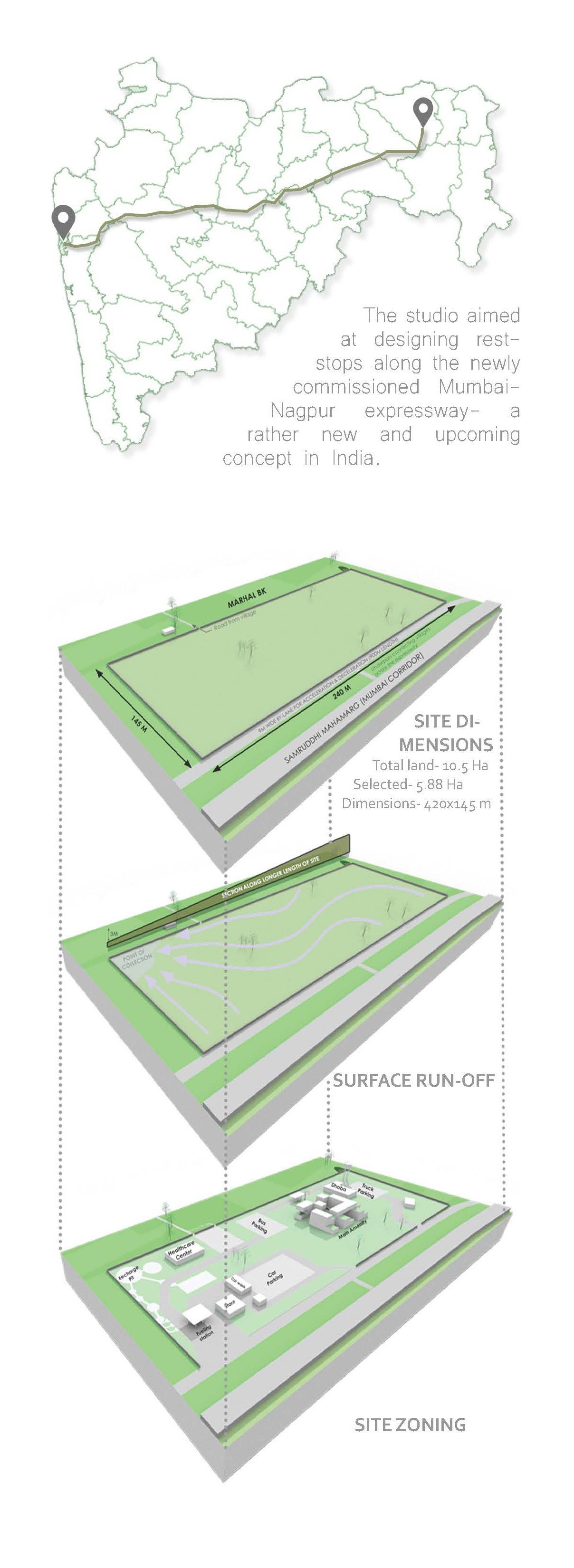
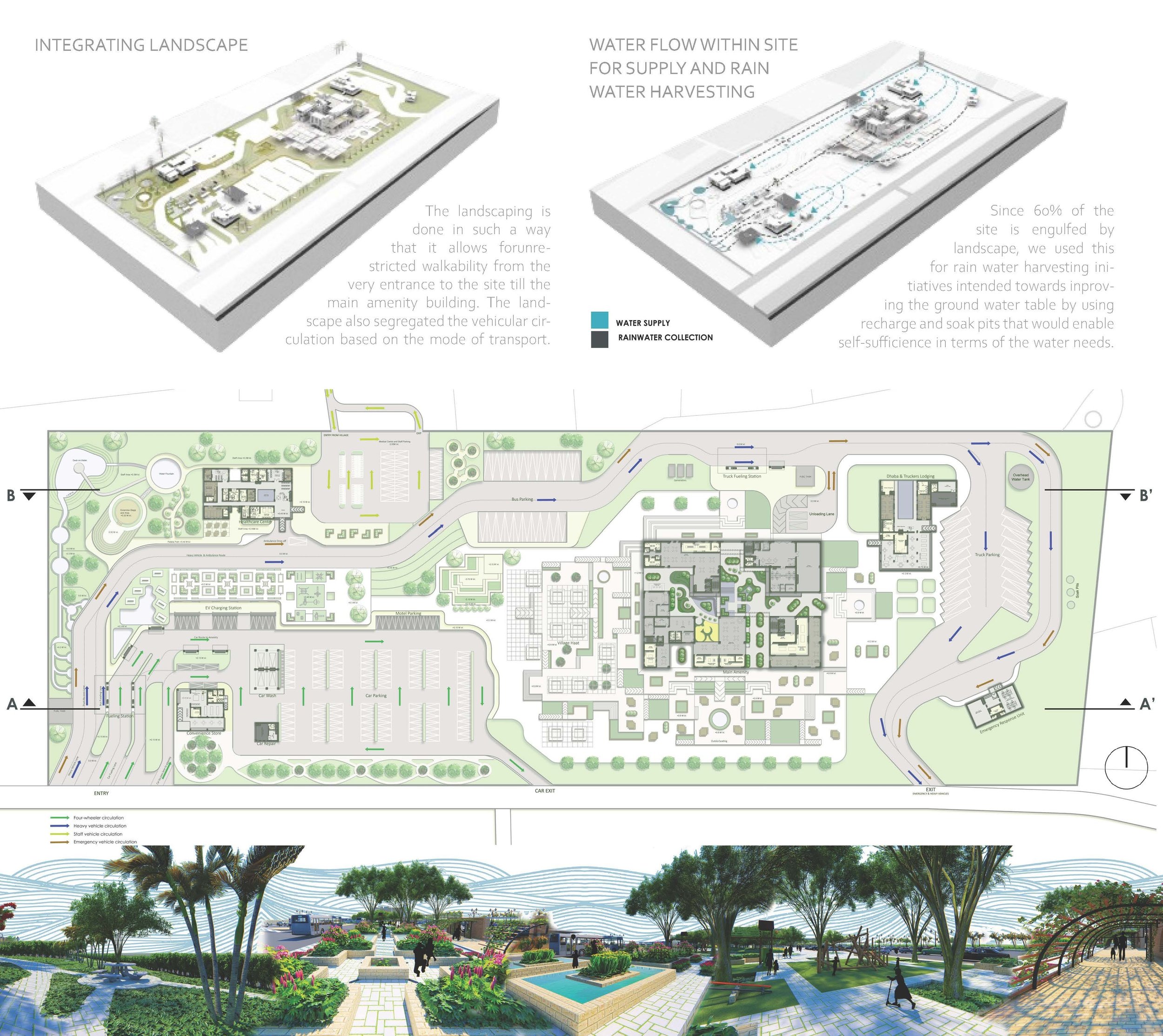
The design organizes the 5.88-hectare site along the Mumbai-Nagpur Expressway as a landscape-led rest stop, where zoning, surface run-off management, and integrated water-harvesting systems shape circulation. Layered bands of parking, amenities, and shaded promenades create a porous, walkable foreground to the main amenity building and healthcare core.
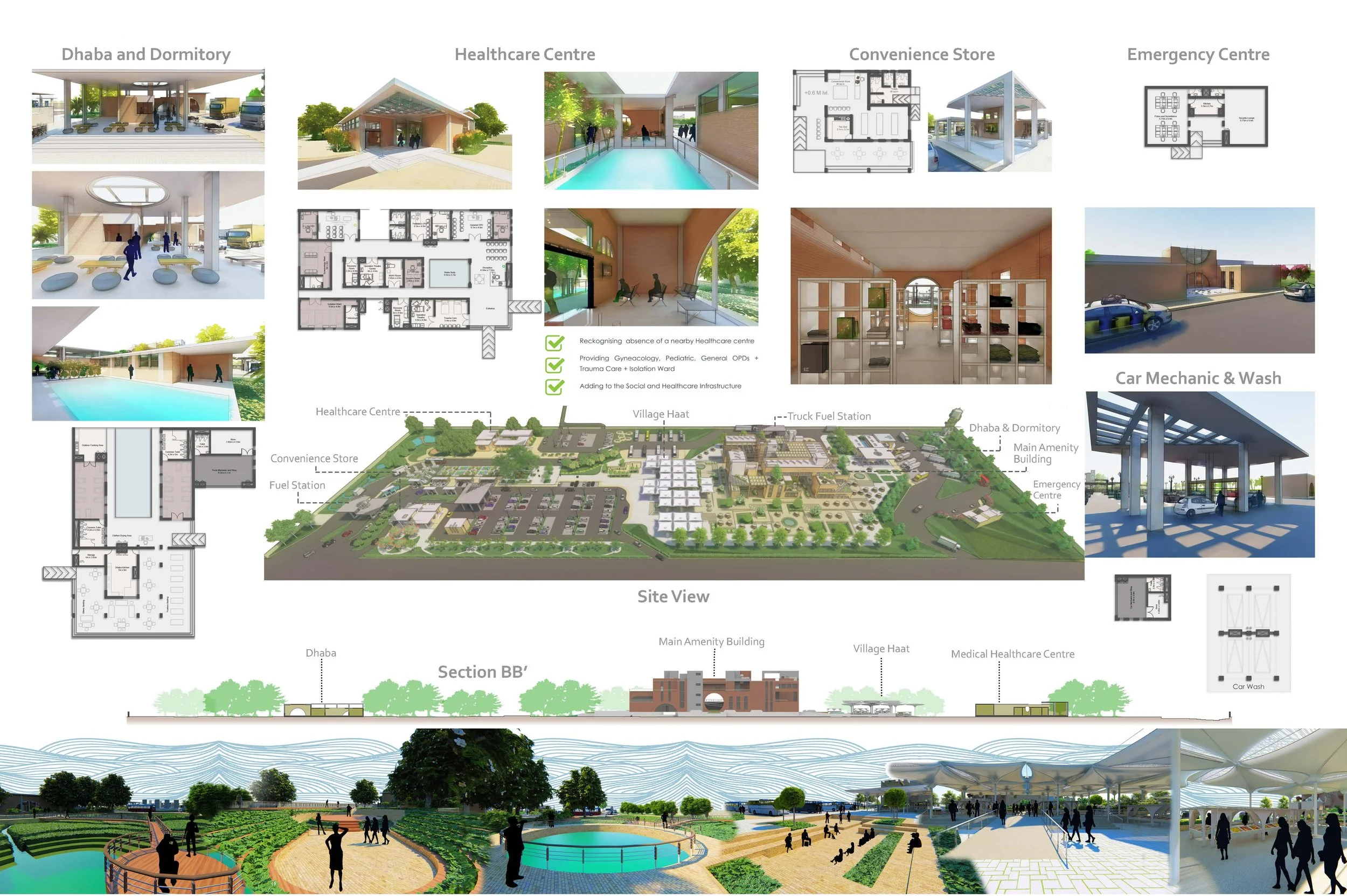
Apart from the basic functional requirements of a typical wayside amenity, the project brief required that 20% of the site be reserved for future expansion; however, our site visit revealed that neighbouring villages lacked both accessible healthcare and a formal marketplace for agricultural produce and crafts. Responding to these territorial deficiencies, we reallocated the expansion land to develop a significantly larger healthcare facility that functions both as an emergency center for highway accidents and as a primary healthcare hub for surrounding settlements. Complementing this, we designed a village haat that enables local producers and artisans to sell directly to visitors, integrating regional livelihoods into the everyday life of the wayside amenity.
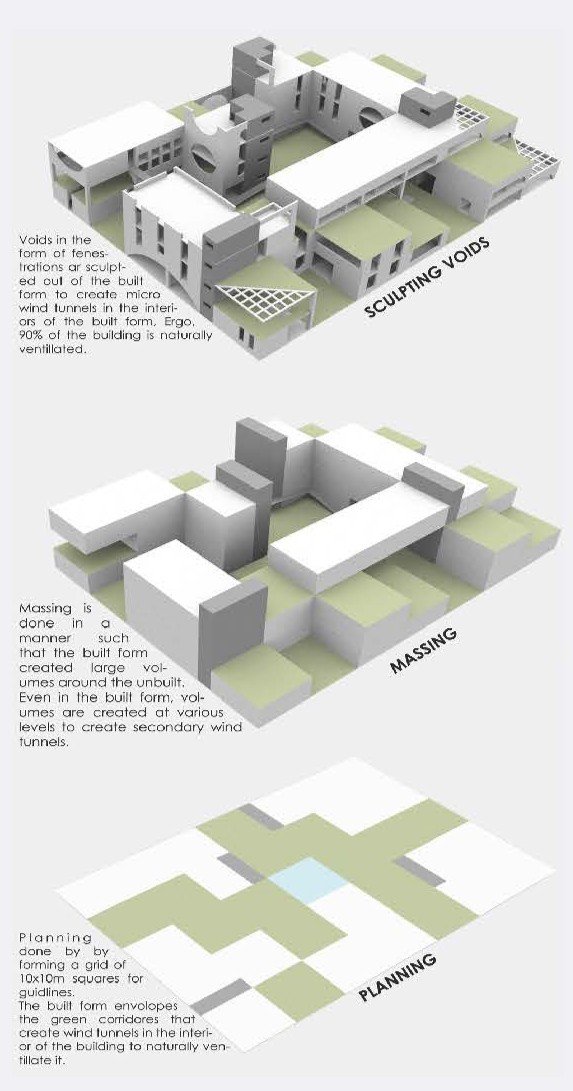
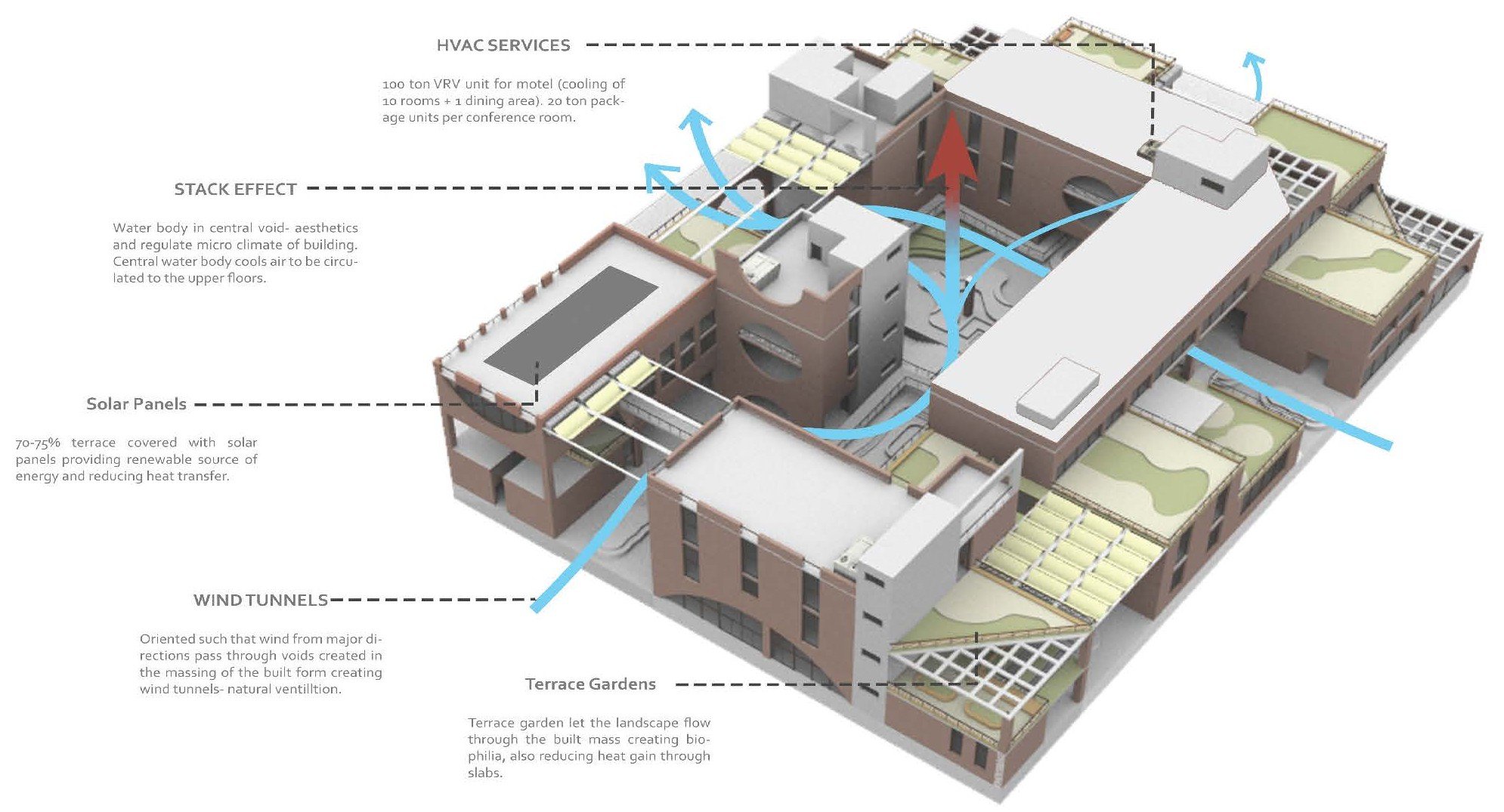
The main amenity building is envisioned as the climatic and social anchor of the wayside complex, concentrating the most public programmes within a compact yet porous volume. Its massing is composed as a series of interlocking bars wrapped around courts, voids, and terrace gardens that choreograph movement from the forecourt into progressively more intimate interior zones. These carved voids are not merely formal; they are calibrated to harness the stack effect and prevailing winds, drawing air through shaded passages and up through taller volumes to achieve continuous natural ventilation.
At ground level, a gridded plan weaves together arrival lobbies, food courts, retail, rest areas, and sanitary facilities with landscaped pockets, ensuring that every major program maintains a visual and spatial connection to greenery and daylight. Circulation is conceived as a meandering promenade rather than a rigid corridor, allowing travellers to slow down, discover shaded seating, and re-orient themselves between parking areas and other site amenities. The central water body, positioned within the primary void, supports evaporative cooling, further moderating the microclimate and reinforcing the sensory shift from highway to refuge.
Upper floors house the motel rooms, staff facilities, and more enclosed program, arranged around double-height courts and light wells that bring daylight deep into the plan while preserving cross-ventilation. Roof terraces are treated as productive and performative surfaces: 70–75% of the terrace is covered with solar panels to generate on-site energy and reduce heat gain, while planted terraces and pergolas insulate the slabs and extend the landscape vertically. Service zones and HVAC equipment are consolidated along a single spine, simplifying maintenance and keeping the main courts visually uncluttered. Collectively, the building operates as an environmental buffer, a wayfinding device, and a slow, shaded interior “street” that structures the entire wayside experience.