
Sustaining Yakshagana Associated Artisans
A Multi-dimensional Exploration of Sustainable Architecture

Sustaining Yakshagana Associated Artisans: A Multi-dimensional Exploration of Sustainable Architecture. The thesis engages the paradox of a vibrant performance tradition, Yakshagana, flourishing in public imagination while the ecosystem of artisans who sustain its visual and sonic language steadily thins out. Generations of Kushalakars- weavers, wood carvers, and percussion-instrument makers, have historically anchored the theatre’s costumes, ornaments, and soundscape, yet now navigate seasonal income, dispersed workshops, and diminishing social value for their kula vratti (clan profession). The work traces how these pressures, amplified by rural urbanisation and aspirational shifts in younger generations, render the crafts increasingly invisible even as the performances attract growing audiences.
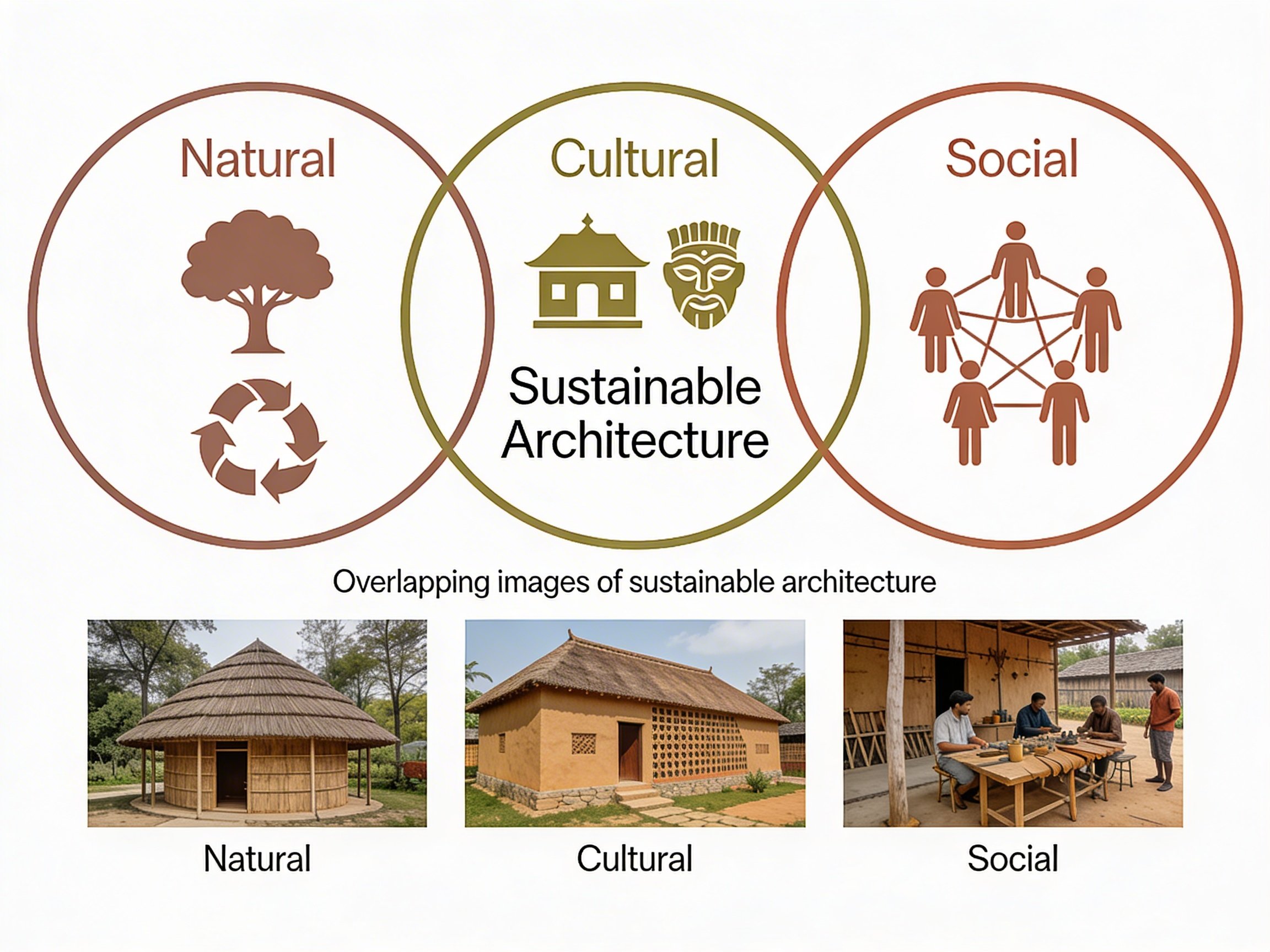
Conventional sustainability discourse often narrows to environmental metrics, rating systems, and technological add-ons, leaving deeper social and cultural questions unaddressed. When transplanted uncritically into rural contexts, such approaches slide toward greenwash and culturewash, aestheticising “eco” imagery without engaging local practice or economic reality. The research instead adopts a multi-dimensional understanding of sustainable architecture built around three overlapping images: the natural, the cultural, and the social, treated as interdependent rather than parallel checklists. This framework asks how architecture can regenerate ecologies, support traditional livelihoods, and transmit cultural knowledge simultaneously, positioning rural sustainability as a question of relationships rather than objects.
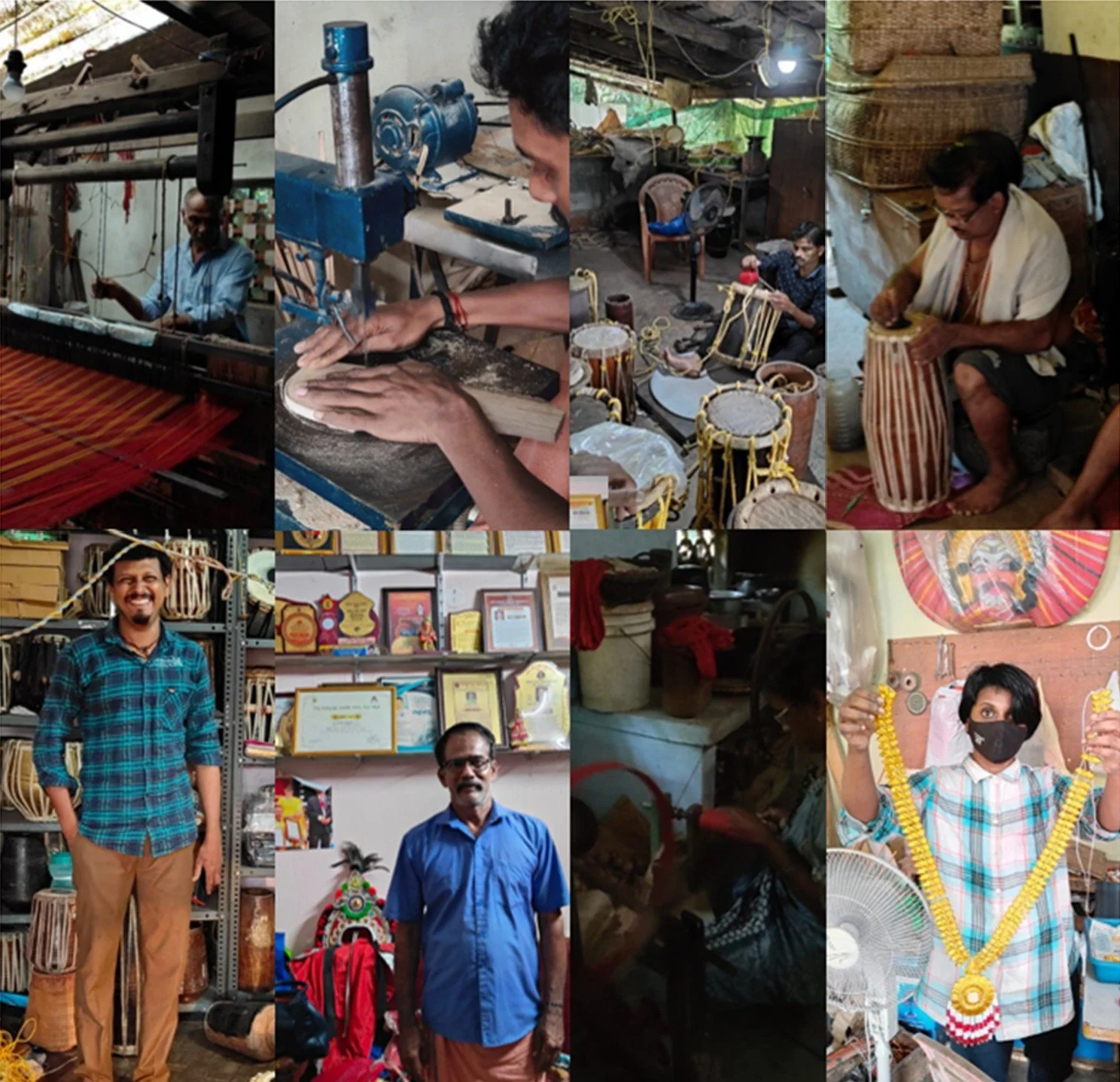
Methodology combines theoretical inquiry with grounded fieldwork across the districts of Dakshina Kannada and Udupi. Literature on adaptation, vernacular building, and rural economies provides a lens to read historic responses to climate and community organisation, while case studies of community-led projects and artisan settlements demonstrate spatial models where collective identity and livelihood intertwine. Site visits, semi-structured interviews, and on-ground observations with Nekaras, Badagis, and Chande–Maddale makers reveal the everyday negotiations of work, storage, and family life embedded in verandas, back sheds, and improvised workrooms. These encounters expose both tangible constraints: space, tools, transport and intangible ones: social status, intergenerational aspirations, and gendered labour.
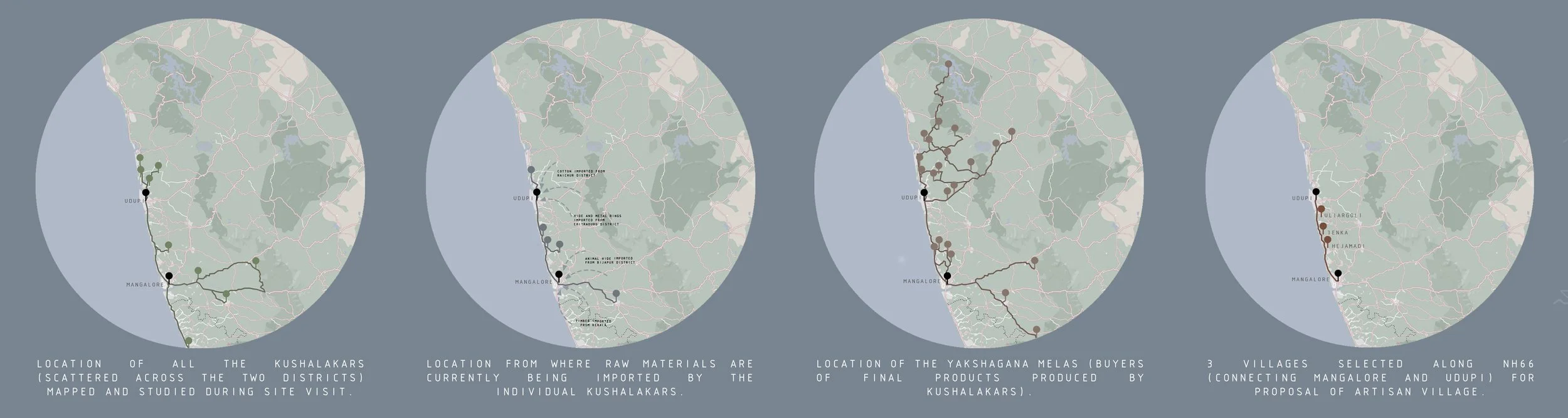
Mapping emerges as a key tool for making a largely invisible community legible at a territorial scale. Layers chart the locations of Yakshagana troupes, artisan homes, existing cultural institutions, and regional infrastructure such as NH66 and local markets. Patterns show artisans orbiting performance circuits yet rarely co-locating, with long travel distances, fragmented supply chains, and modest incomes limiting collaboration. The mapping also reveals micro-geographies of opportunity, nodes where transport access, available land, and cultural memory converge, suggesting that a carefully located architectural intervention could re-knot dispersed threads into a shared fabric
Building on these insights, the thesis articulates the idea of “architecture that sustains the rural realm” as both physical and programmatic infrastructure. Rather than treating buildings as static objects, the proposal considers architecture as a medium through which relationships between ecology, economy, and culture are continually negotiated. The natural image directs attention to water, soil, and vegetation patterns on the coastal site: drainage lines, prevailing winds, monsoon behaviour, and existing tree cover inform the orientation and porosity of the built form. The cultural image draws spatial logics from Guttu houses and rural public buildings, courtyards, shaded otlas, thick masonry bases, while adapting to pressing material constraints like regional timber scarcity through innovative structural solutions.
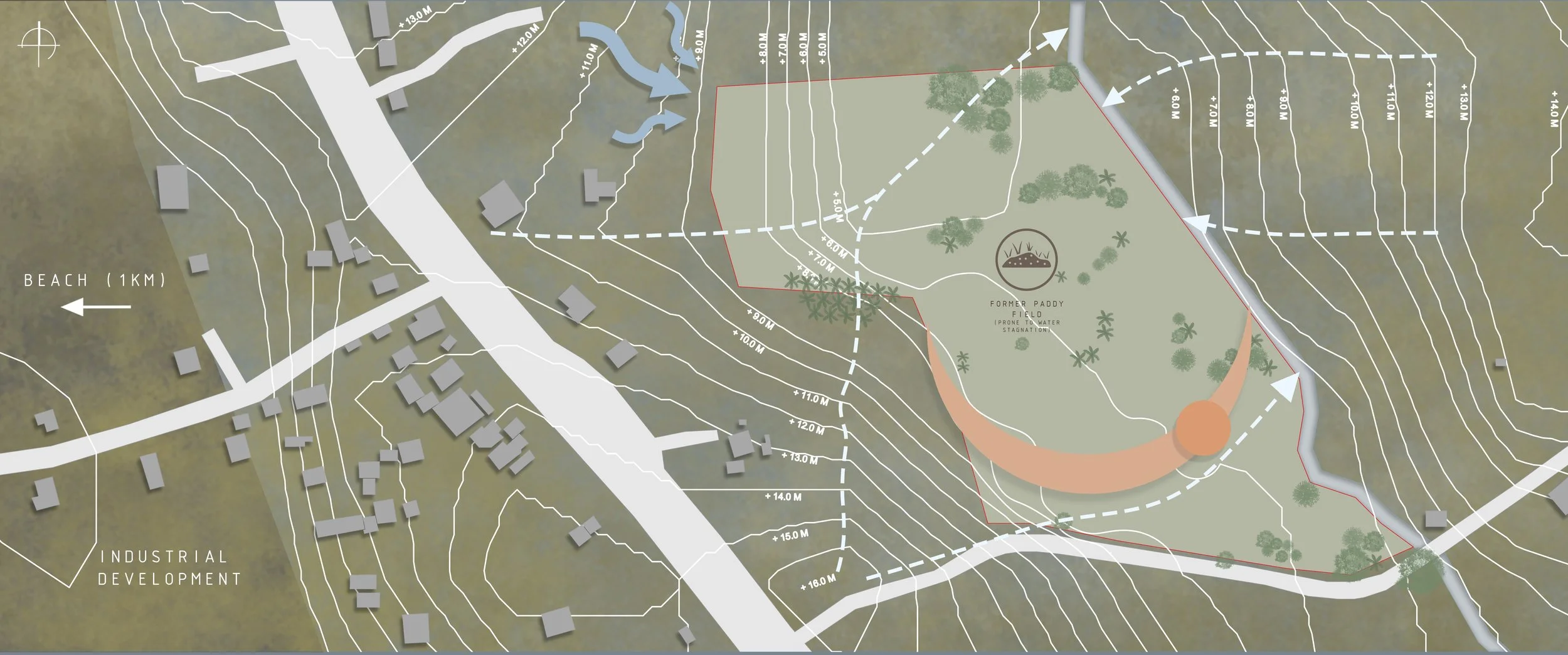
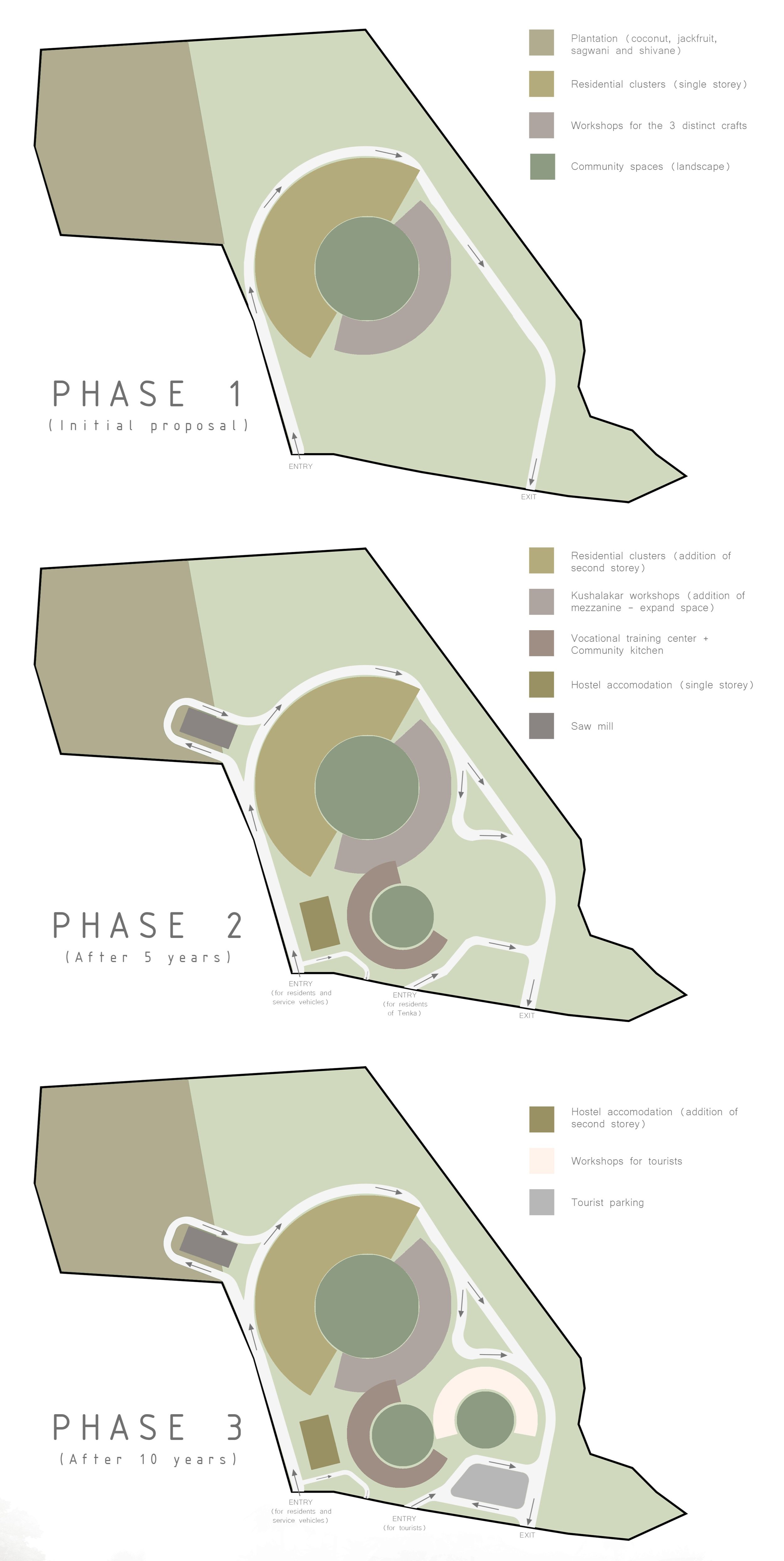
The design culminates in a proposal for “Kushalakar Halli,” an artisan village strategically located along NH66 within reach of major Yakshagana circuits. The masterplan organises the site into three interlocking bands: a production spine of shared workshops and material yards; a residential belt of incremental live-work units that enable families to expand over time; and a civic and cultural edge comprising performance space, training studios, and exhibition areas open to the wider public. Architecture draws upon locally available materials such as laterite, timber, and clay tiles, deploying them through modular structural systems that support self-building and future adaptation. Courtyards and semi-open verandas mediate between work and domestic life, accommodating the messy overlap of tool storage, dyeing, drying, rehearsals, and everyday social gathering under varying weather conditions.
Equally important, the project frames the artisan village as a platform for transmission and evolution of craft rather than a static museum of “heritage.” Spaces for apprenticeship, residencies, and cross-disciplinary workshops invite new forms of collaboration between artisans, performers, designers, and researchers. Programmatic strategies encourage year-round activity beyond the Yakshagana performance season: diversified product lines, shared marketing infrastructure, and flexible workspaces reduce dependency on a single income stream while keeping the core vocabulary of Yakshagana intact. Over time, the architectural framework enables change through incremental additions and reconfigurations, allowing the community to negotiate shifts in demand, technology, and climate without severing ties to its material and cultural roots.
Ultimately, the thesis positions sustainable architecture in rural contexts as a long-term commitment to nurturing interdependence, between artisans and performers, between built form and landscape, between past knowledge and future possibility. The Kushalakar Halli proposal tests how an architectural and landscape framework can stabilise livelihoods, foreground intangible cultural practices, and host the evolving narrative of Yakshagana without freezing it in time. The work invites a reading of sustainability not as a label or style but as a continuous process of sustaining people, places, and practices in relation to one another.