Yakshahalli
Behind the Velvet Curtains of Yakshagana
Sustaining Yakshagana Associated Artisans is an undergraduate design thesis that proposes an architectural and landscape framework for the village of Yakshahalli, conceived as a dedicated settlement supporting craft communities linked to the performance tradition of Yakshagana in Tenka, coastal Karnataka. The project situates itself within a rural context where ecological fragility, cultural erosion, and economic precarity intersect, and responds with a design that integrates local materials, traditional skills, and landscape systems into a coherent spatial and infrastructural strategy.
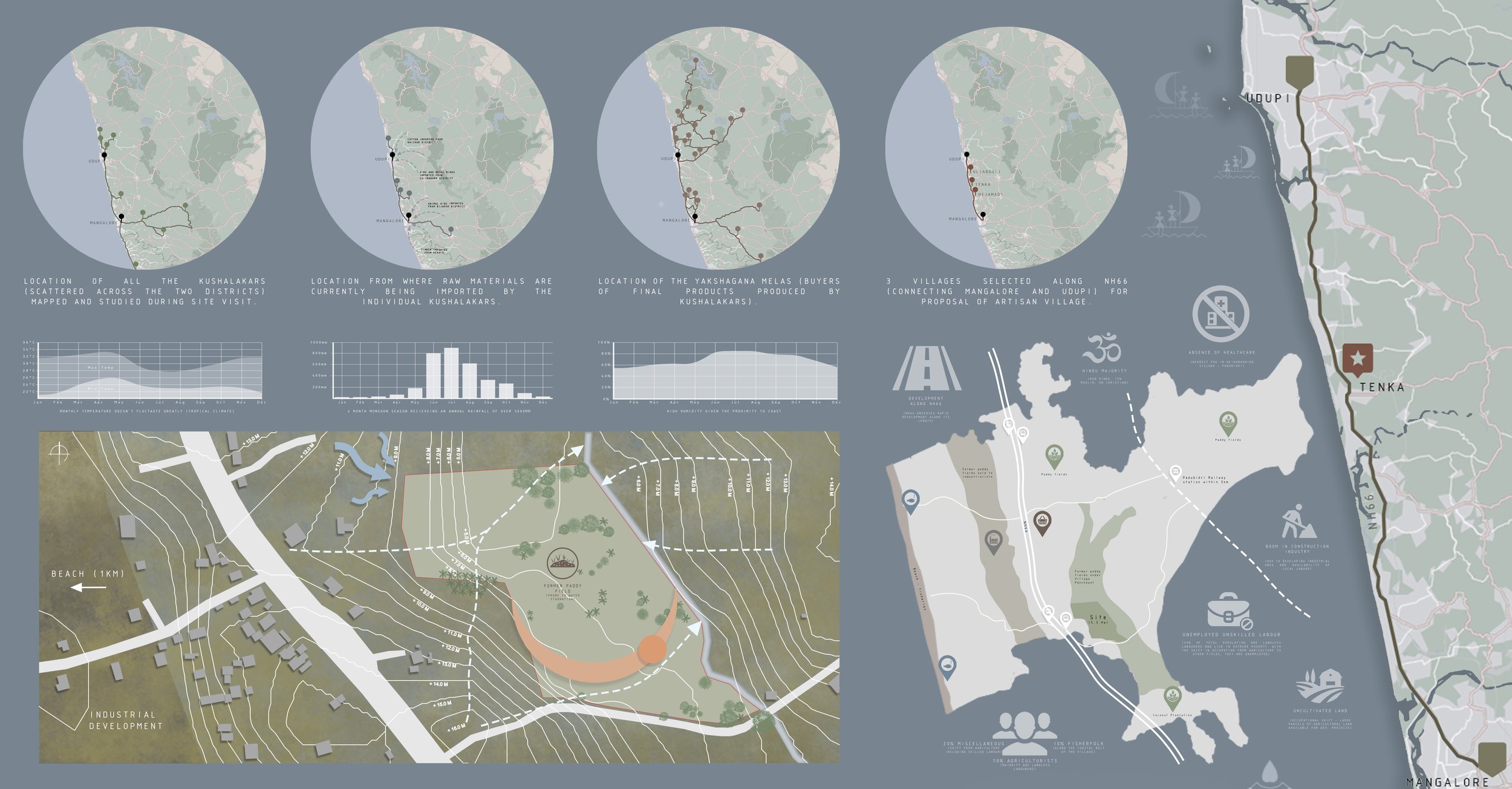
Located along the western coast of Karnataka, the site sits between the sea and the Western Ghats in a landscape defined by lateritic plateaus, seasonal streams, and dispersed rural settlements. The master plan is conceived as an extension of existing village structures rather than an isolated complex, using natural contours, watercourses, and paths taken by artisans as the primary drivers for siting built forms and open spaces. This contextual reading informs the placement of residential clusters, workspaces, and communal areas, ensuring that new interventions anchor themselves in existing cultural and ecological patterns.
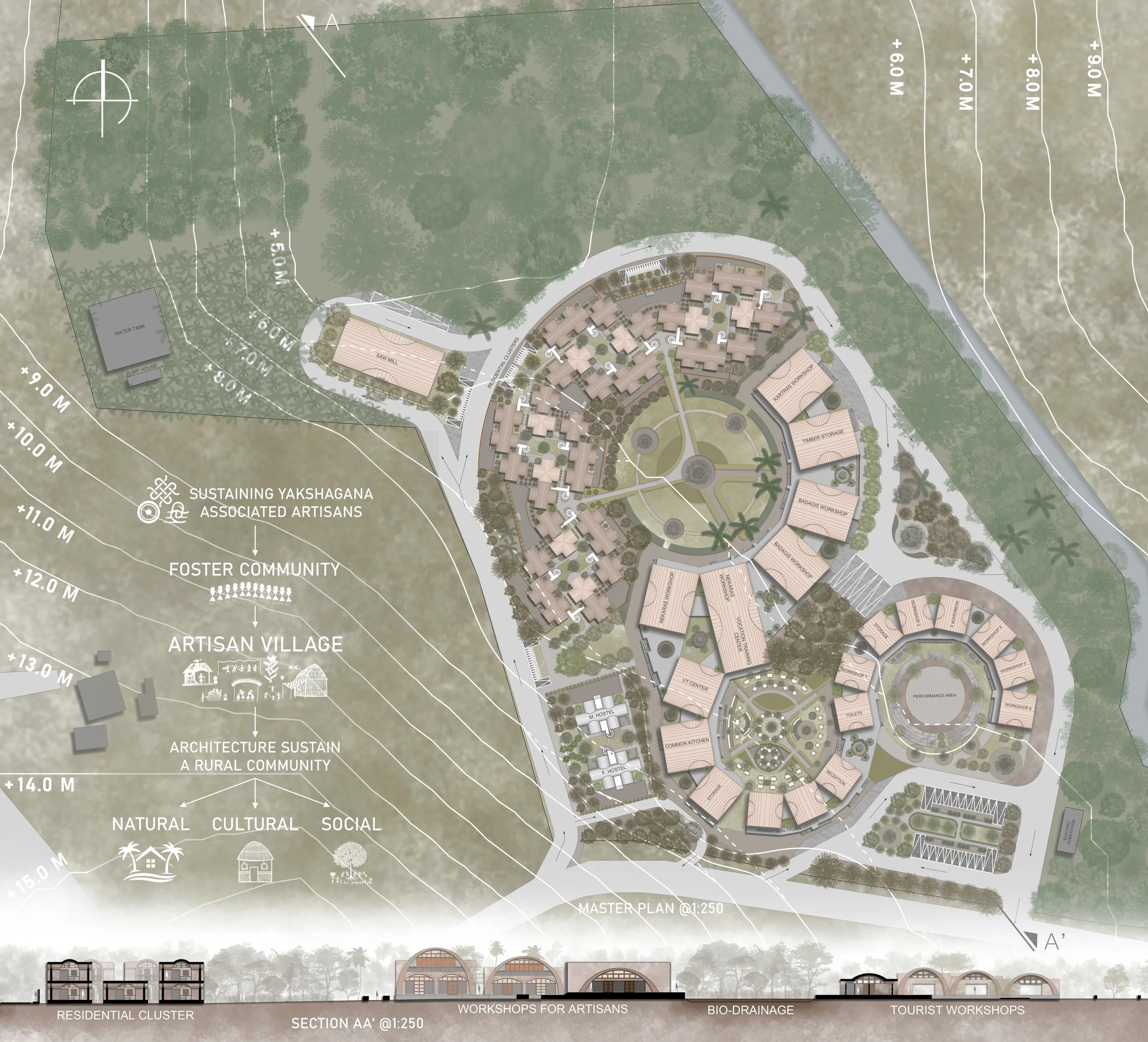
The design is framed by an understanding that sustainability in the rural realm must address ecological balance, cultural continuity, and social equity simultaneously. The thesis interrogates the twin crises of environmental degradation and identity loss, positioning the project against both superficial “green” gestures and nostalgic formalism by foregrounding long-term relationships between people, materials, and landscape. Architecture is articulated as a mediator between community and economy, enabling traditional crafts to remain viable while strengthening local resource cycles and everyday life.
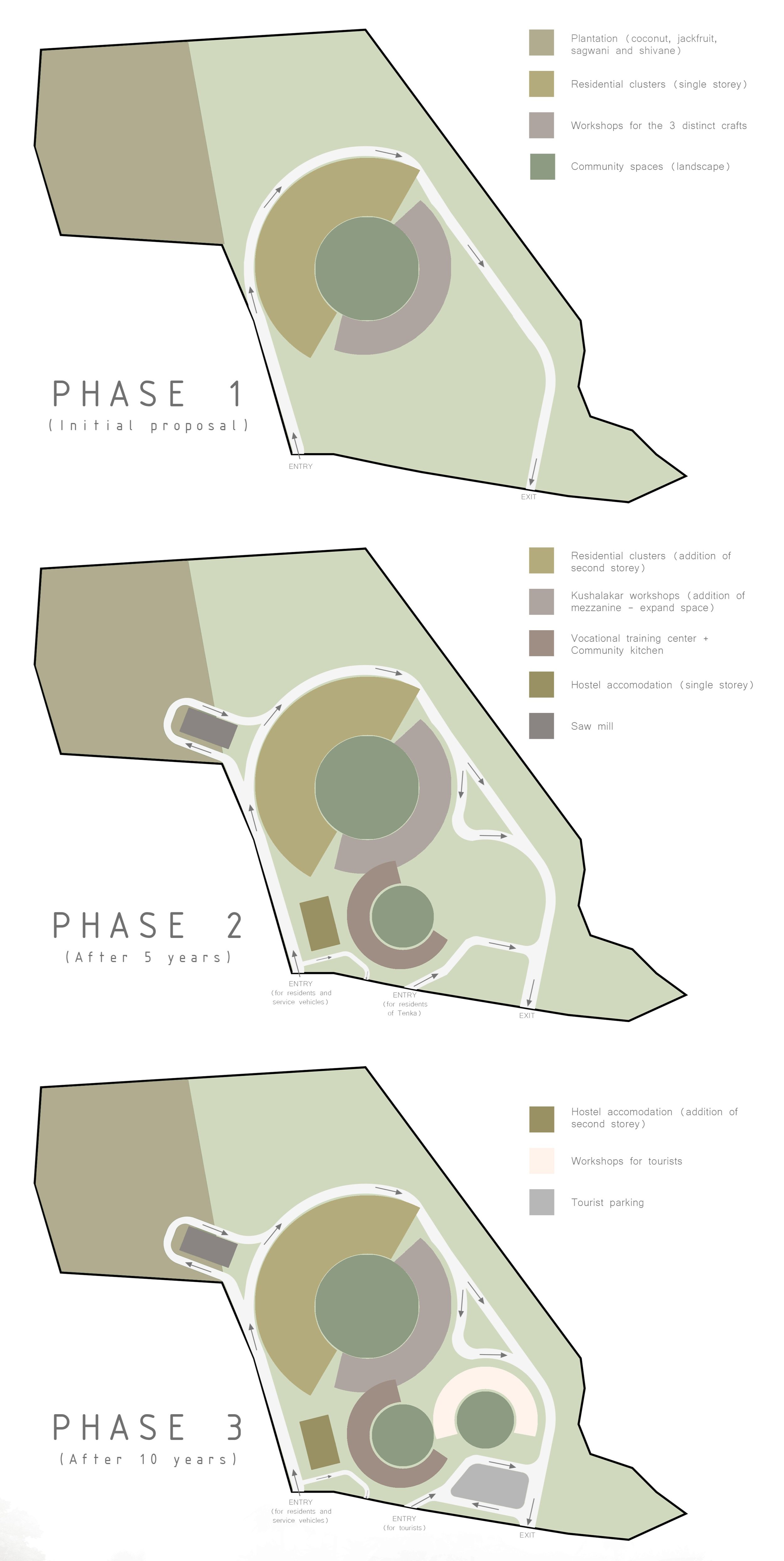
The design is intended to be realized in phases, reflecting the financial and organizational realities of rural community projects while embedding flexibility for future adaptation. Initial stages prioritize essential residential and workspace infrastructure, with subsequent phases expanding community facilities, training programs, and landscape interventions as local capacities grow. Through this incremental, community-oriented approach, the project positions itself not as a finished object but as a framework within which Yakshagana-associated artisans and their broader rural network can continue to evolve, maintain autonomy, and sustain their cultural and ecological environment over time.
At the scale of the master plan, the proposal organizes the programme into a porous network of workshops, housing, training spaces, and community facilities woven into an agro-ecological landscape. Circulation follows existing desire lines and contour paths, while open spaces are calibrated to support both everyday use and episodic events related to Yakshagana performances and associated crafts. Built and unbuilt areas are deliberately balanced to maintain recharge zones, retain productive land, and preserve the visual and experiential character of the rural setting.
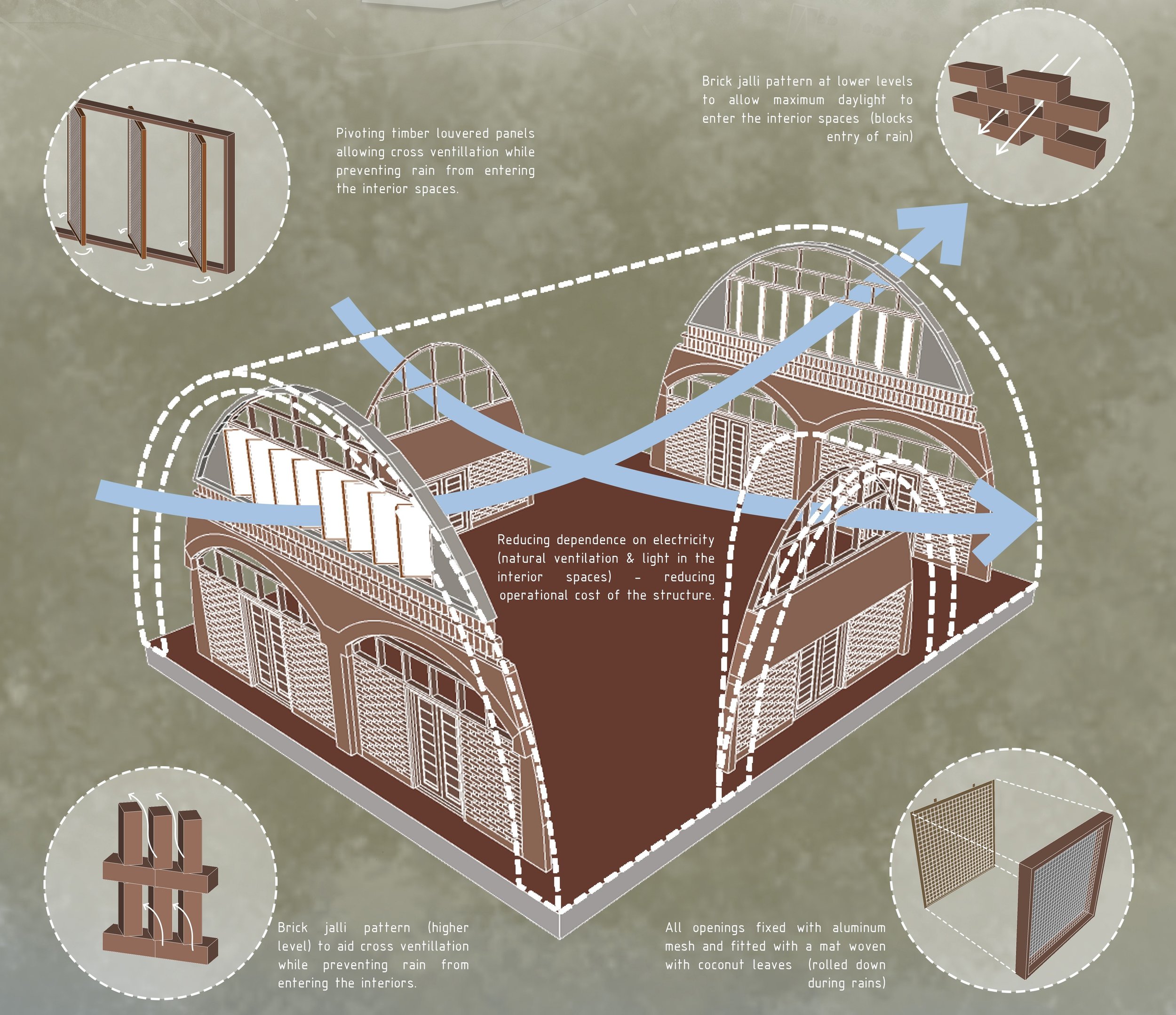
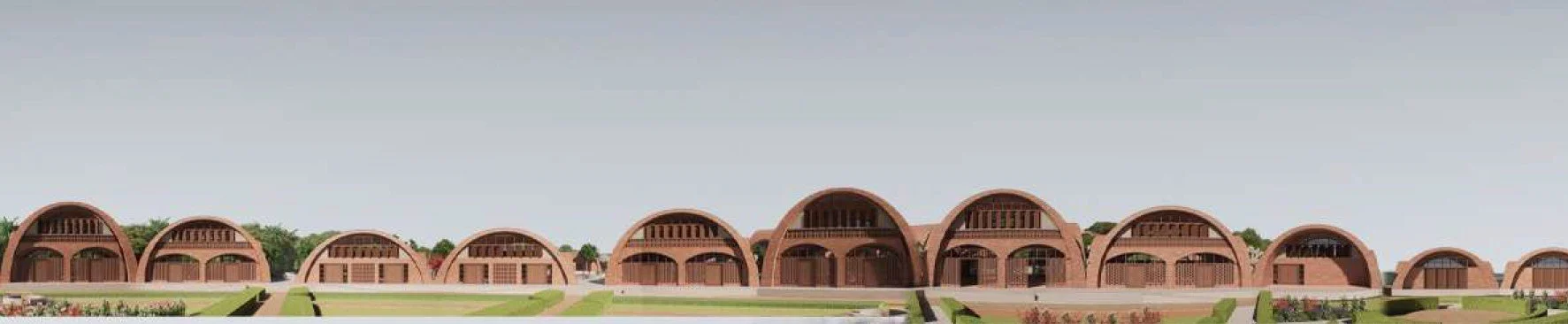
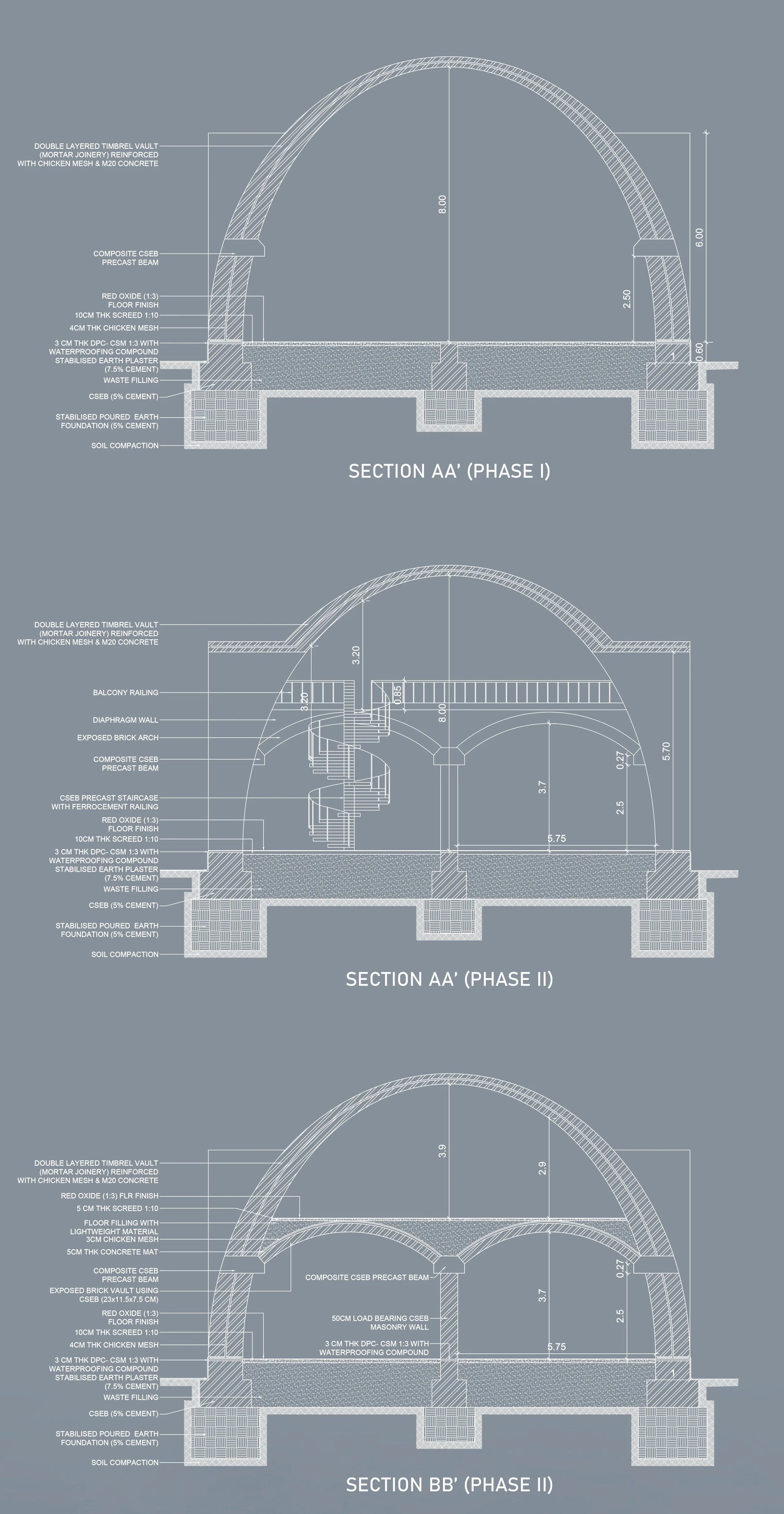
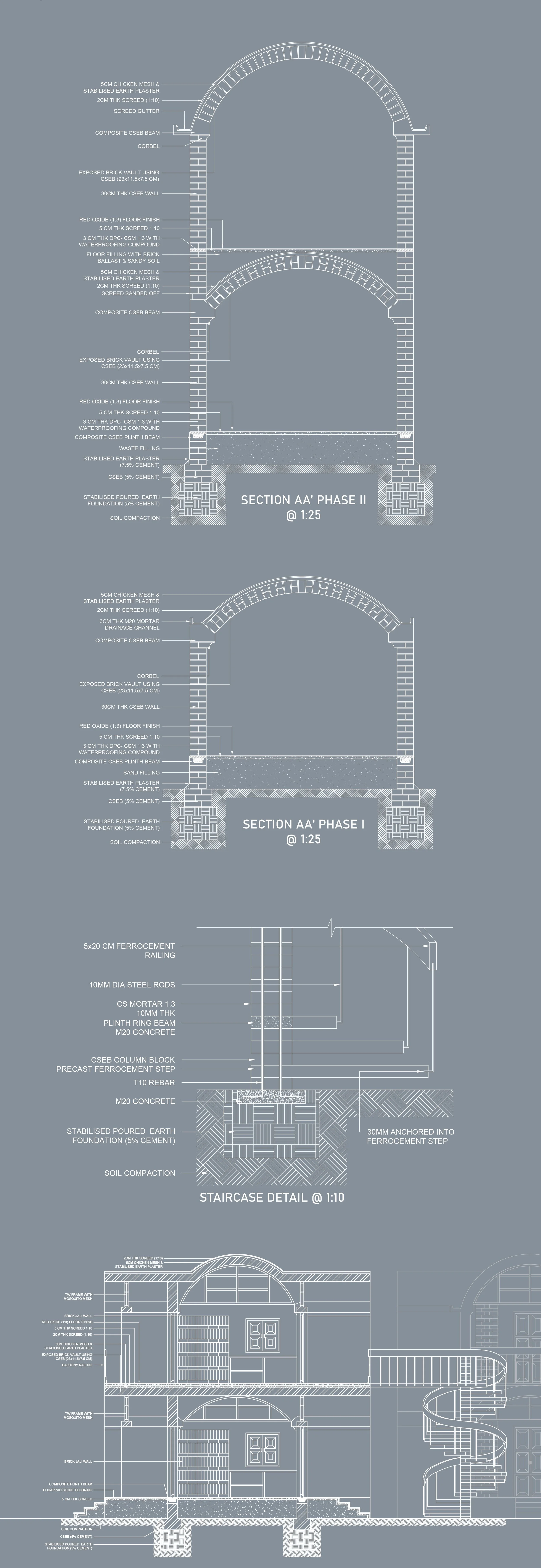
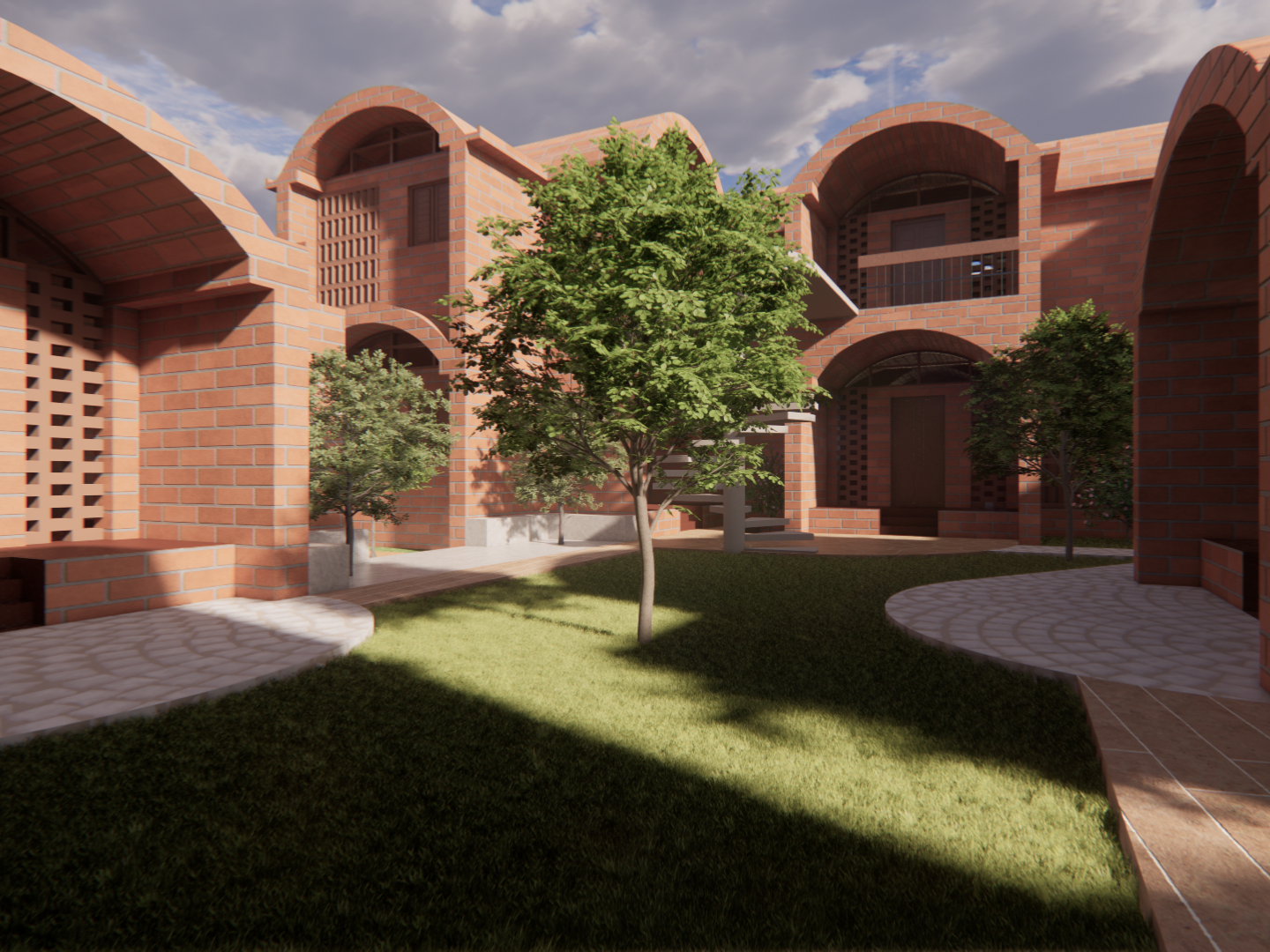
The project's spatial language is defined by a family of vaulted roof systems, barrel, segmental, and groin vaults, developed in response to heavy rainfall, high humidity, and limited access to conventional roofing materials. The curved roof profiles minimize water stagnation, increase the effective surface for convective cooling, and, in combination with the thermal mass of earthen construction, moderate indoor temperatures across diurnal and seasonal cycles. Studies on solar exposure and air movement inform the orientation and height of the vaults, resulting in interiors that remain comfortable with minimal mechanical intervention and in which the structural logic of the buildings is legible in their silhouettes.
Daylighting and natural ventilation strategies are integral to the experience of the workspaces and dwellings. Gable openings at the apex of vaults enable cross-ventilation and facilitate a stack effect that draws warm air upward and outward, while operable timber panels and carefully proportioned brick jalis admit diffused light and air without compromising privacy or rain protection. The placement and rhythm of these openings respond to specific programmatic needs—such as the requirements of textile work, costume preparation, or metal craft—ensuring that interior environments support the detailed, labor-intensive practices of the artisans.
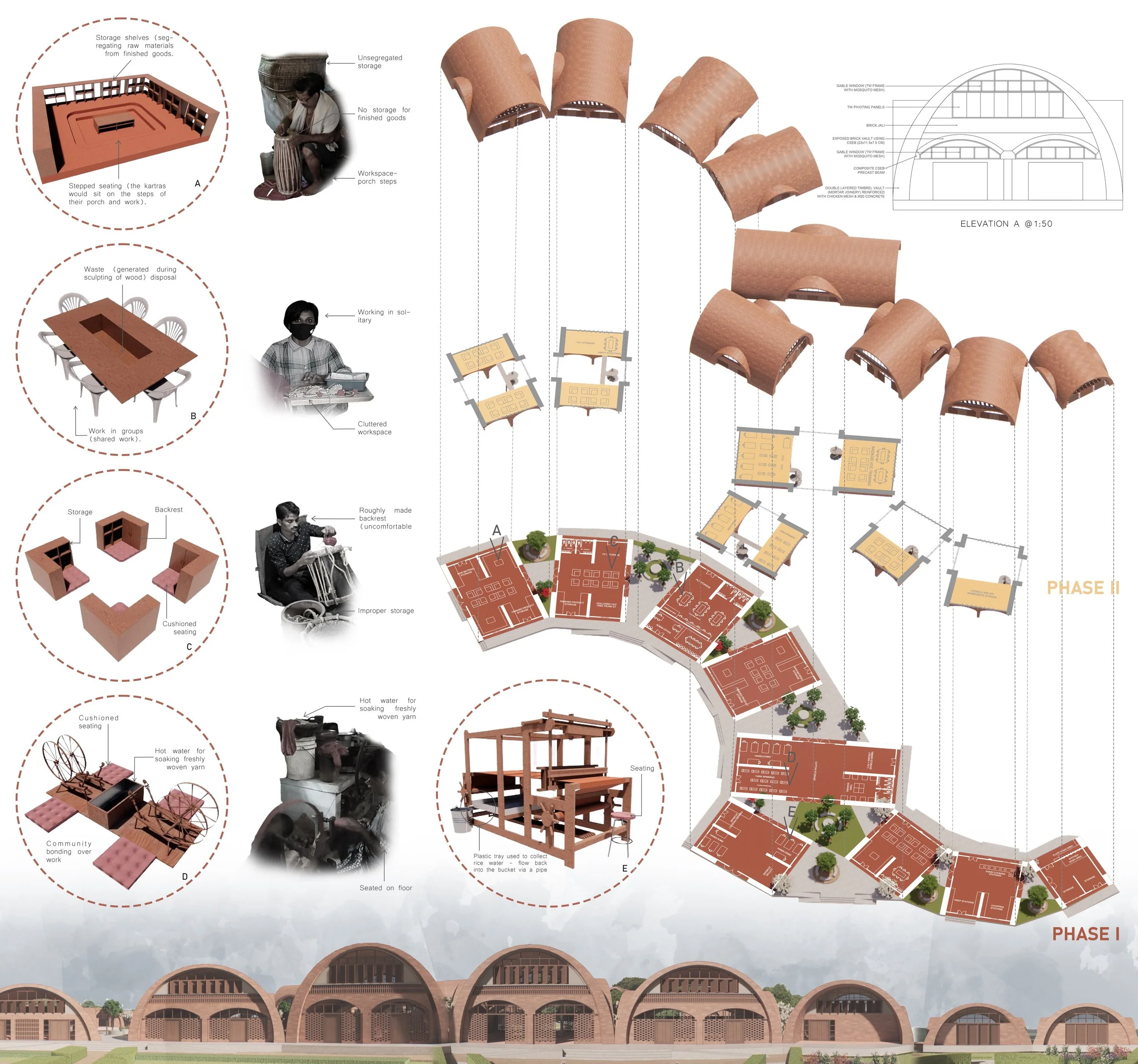
Workspaces and training areas are conceived as robust, flexible volumes that can accommodate multiple scales of craft production, from individual artisans to larger cooperative initiatives. Structural systems based on load-bearing masonry and composite beams enable wide, column-free interiors, while continuous vaults and mezzanines provide varied volumes suited to activities such as costume making, wood carving, metalwork, and performance rehearsals. The architecture aims to dignify artisanal labour by offering well-lit, naturally ventilated, and structurally expressive spaces that visibly foreground the material intelligence embedded in the crafts themselves.
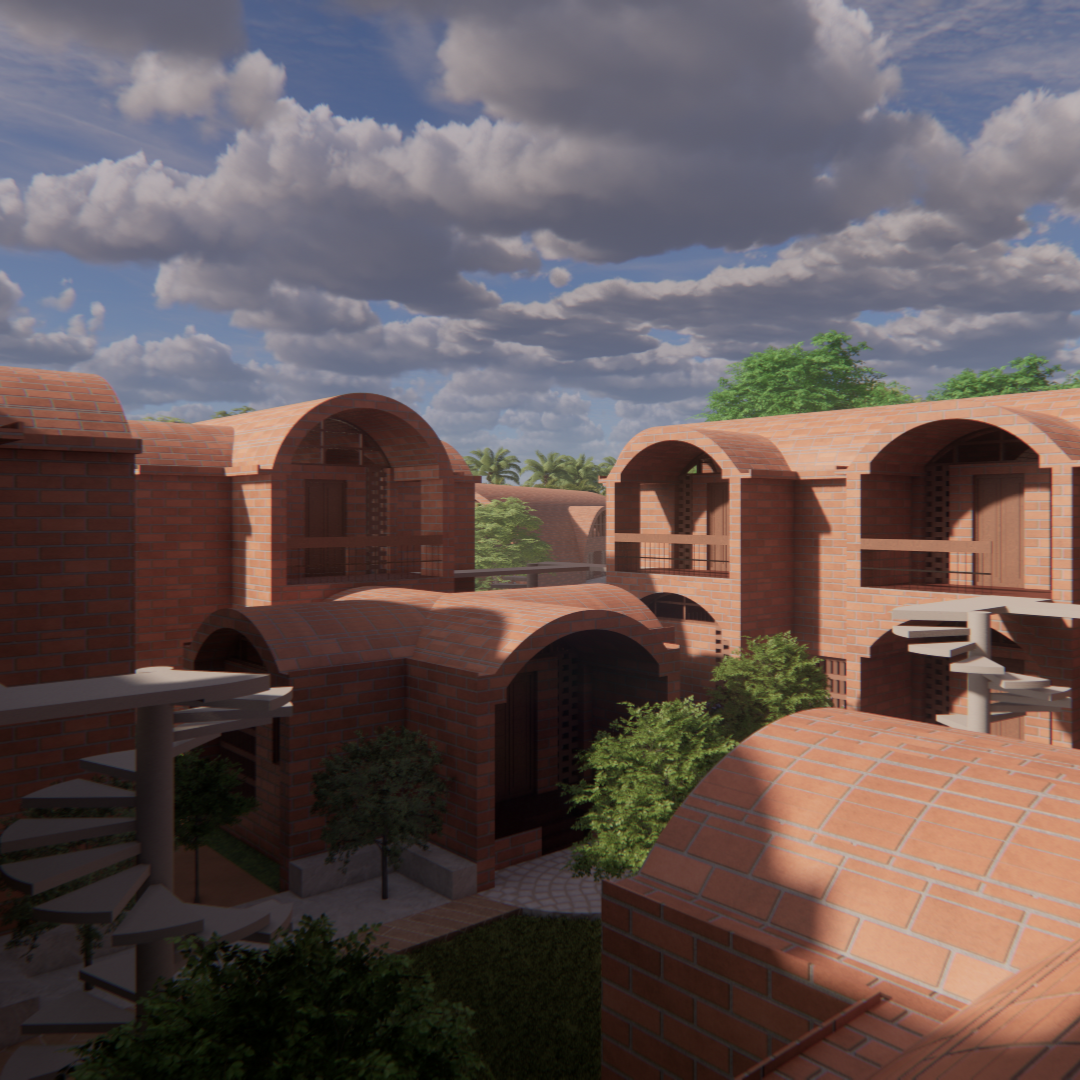
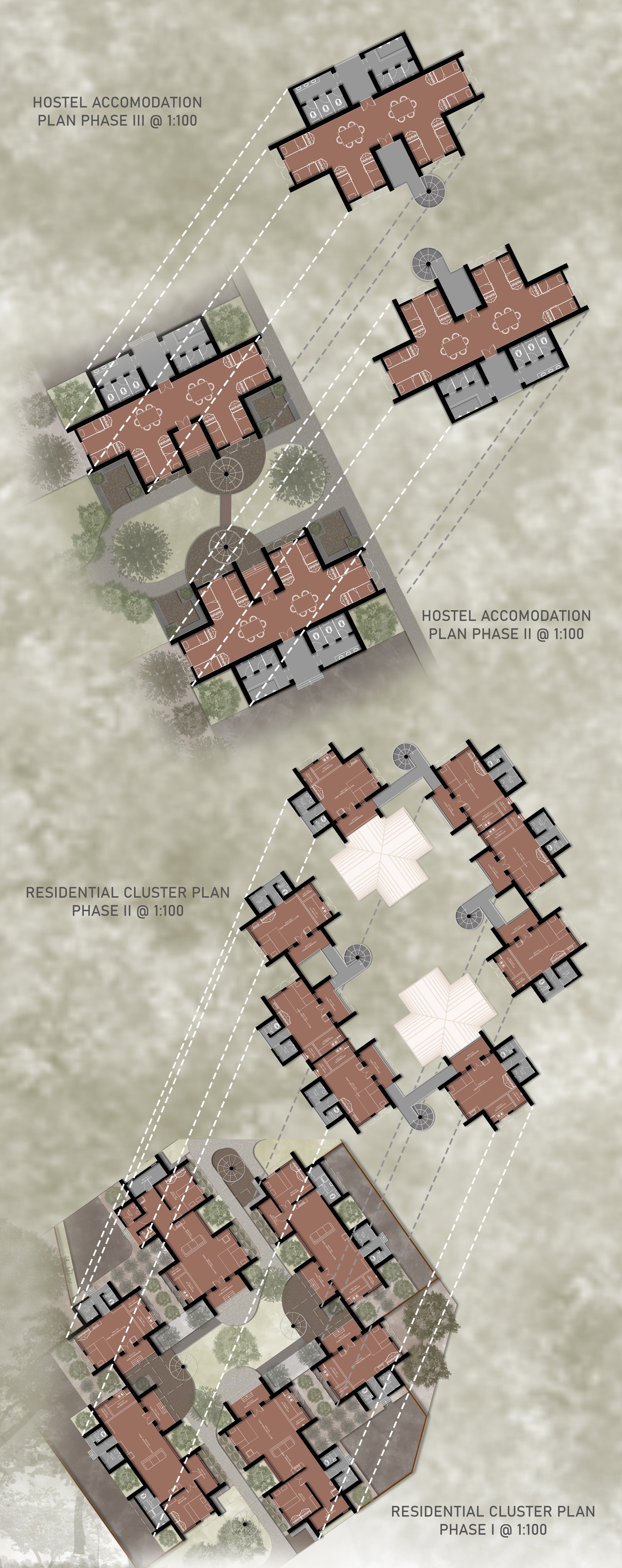
The residential clusters reinterpret familiar rural spatial typologies while accommodating contemporary needs, creating a graded sequence from public to private through shared courtyards, semi-open verandahs, and modest interior rooms. Landscape design around the homes incorporates species commonly found in traditional homesteads, such as fruit trees, climbers, and aromatic plants, arranged according to their water requirements and everyday use. These everyday ecologies support food production, microclimatic comfort, and social interaction, making the cluster not only a housing solution but also an armature for collective life.
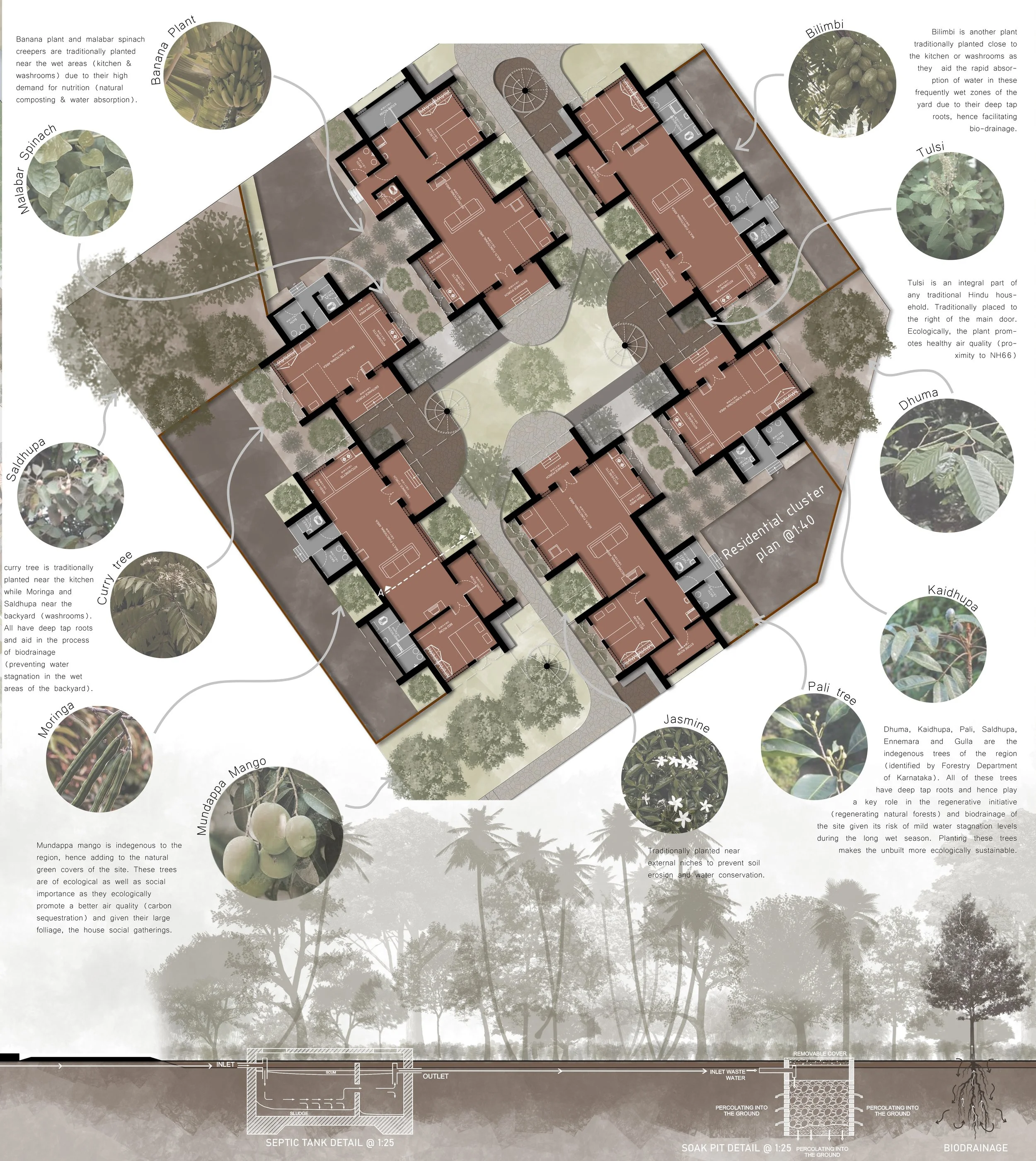
The landscape and water management strategy uses terracing, planted slopes, and controlled surface flows to address the high rainfall and shallow water table characteristic of the site. Rather than relying solely on hard drainage infrastructure, the design employs vegetated channels, retention areas, and subtle grading to facilitate infiltration and controlled discharge into existing streams. Rainwater harvesting, on-site treatment of wastewater, and calibrated recharge zones collectively balance annual water demand for domestic use, craft activities, and planting, while reducing the risk of oversaturation and flooding.
Ecological planting extends beyond the residential clusters into productive and protective belts that stabilize soil, foster biodiversity, and provide raw material and shade. Species selection responds to multiple criteria, including root depth, water consumption, canopy spread, and cultural significance, so that the landscape simultaneously mitigates environmental risk and reinforces the rhythms of rural life. The result is a mosaic of cultivated fields, tree groves, and micro-wetlands that allow the site to act as a living infrastructure for water management, microclimate regulation, and habitat support.
Yakshahalli represents an attempt to articulate sustainable architecture not as a set of technical prescriptions but as a situated practice deeply responsive to place, culture, and livelihood. By anchoring design decisions in the specific ecological, social, and economic conditions of coastal Karnataka's rural landscape, the project demonstrates how architecture can enable communities to remain rooted while adapting to contemporary pressures. The integration of material systems, spatial typologies, and landscape infrastructures into a coherent whole reflects a commitment to long-term resilience rather than immediate spectacle, positioning the village as both a functional settlement and a testing ground for ideas about rural development, craft preservation, and environmental stewardship. Ultimately, the thesis argues that sustainability in architecture is inseparable from the sustainability of the communities it serves, and that the discipline's relevance in rural contexts depends on its willingness to engage with complexity, incrementalism, and collective agency over time.